
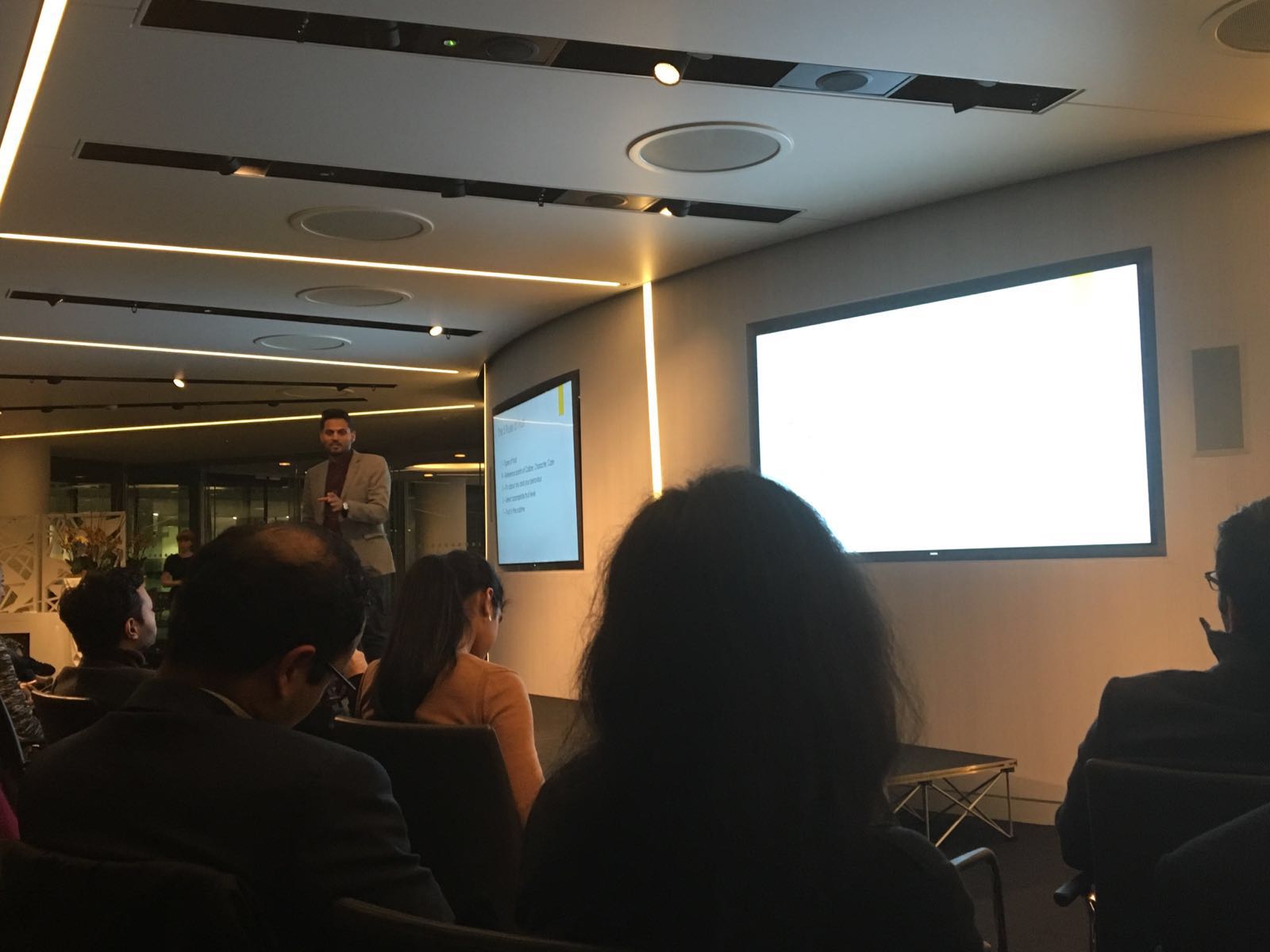
Trust is something that we often talk about, whether it is at home, at university or at our workplaces. Despite making decisions about who to trust every day, we often don’t pay it a second thought. Jay Shetty is a professional in the City and former member of NHSF (UK). On Monday at Ernst & Young Hindu Network’s event, he opened up this topic, sharing new ways to think about the concept of trust.
To me, trust is believing in someone’s actions; that they can do what you might expect them to do in a certain situation. Some other attendees’ explained trust as involving promises, reliability and integrity. Breaking it down in this way, trust in organisations/companies was also brought up, such as accepting a company’s terms and conditions without reading them!
Trust is one of the essences of success in any relationship, in any context. A phrase that really stood out for me was the “willingness to be vulnerable and choosing to take a risk”. However, according to Vedic tradition we live in an age that is characterised by quarrel and hypocrisy, with growing deceit. According to some research, $997bn was lost last year due to deceit in companies! While the definition of deceit is ambiguous, this is still an outrageous number.
In the Bhagavad Gita, Krishna talks about the three modes of trust (proactive, blind and short-term) as well as distrust. Blind trust is that which is given without research or verification. Proactive trust is a mode of goodness, where time is taken to research and verify someone’s trustworthiness. Short-term trust is often given due to passion or feeling, where emotion takes hold over intellect. A great example Jay showed of this was a Jimmy Kimmel clip where false stories about Justin Bieber were shared with fans. Despite the ridiculous nature of the stories, the fans had strong short-term trust, believing he was right to do anything because of their emotion towards him! This sort of trust is misplaced, given by too many of us in our daily lives.
Jay explained how there were three key features we should take into account when deciding whether to trust someone. The first is calibre: does this person have the ability to deliver? At university, we know our lecturers have the calibre and excellence in their subject to teach us about it effectively. The second is character: are you aligned on values, moral principles and long term aims? This is more difficult with lecturers, although they are not likely to share their moral views with you, more likely teaching both sides of a subject. Finally, we should ask if the person cares about you and if you believe that they do. In my opinion, lecturers do care about success of students as it reflects well on their reputation, but beyond that it probably comes down to the individual.
So there are three stages: calibre, character and care, to decide whether or not we should trust someone.
A question from the audience was quite apt in showing this, asking: “I trust my mother unconditionally, but I wouldn’t trust her to buy a car.” This is where calibre is so important, as in this context an elderly person may not have the ability to pick out the correct car, even though in other situations you may trust someone unconditionally.
Overall, the workshop was a great way to think about trust in a new way, and find some practical methods for knowing when or how to trust someone. These can clearly be applied to relationships in any context, and thanks to Jay Shetty for showing them to us!
Niraj Thakrar
PR Team